Accueil / Ressources /
What slab thickness should you use?
What slab thickness should you use?
Bowls, boxes, larger pieces: how to choose a slab thickness that holds up — and why it changes the calculation of your ceramic templates.
LC
Louis Coffin
5
Image de couverture

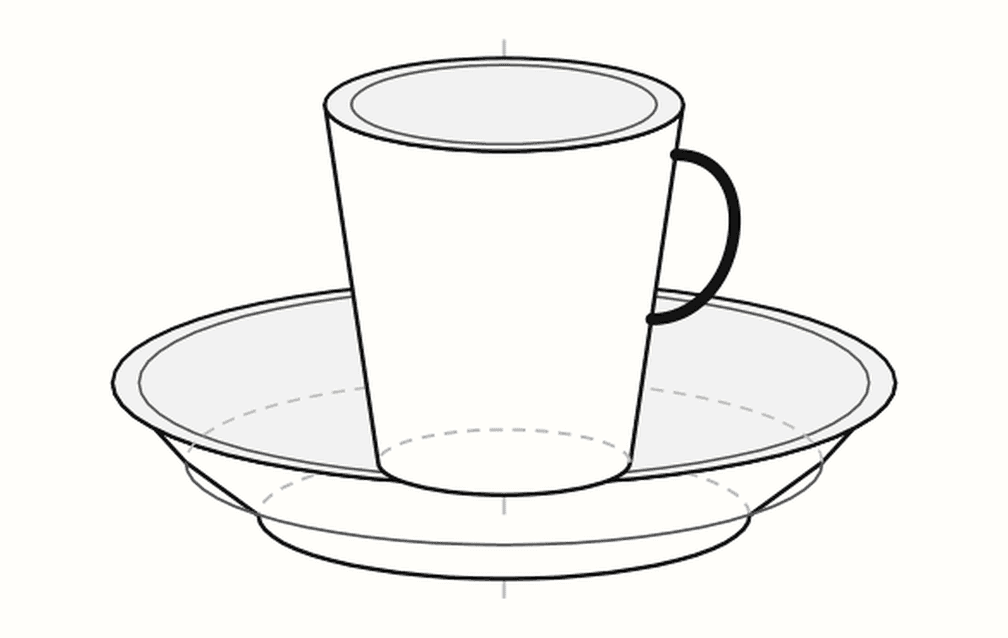
Espresso cup & saucer, on the house
A template to print, then news only when it's worth your time.
Too thin and a slab warps or breaks; too thick and the piece becomes heavy and dries poorly. Thickness also changes the calculation of your template. Here is how to choose it well.
Slab thickness guide
Small pieces — cups and boxes: 4–5 mm.
Bowls and plates: 5–6 mm.
Large pieces and platters: 6–8 mm.
Tall vases: 6–7 mm with internal reinforcement.
Why thickness changes the template
A 5 mm slab does not roll like a sheet of paper. For a cylinder, the cut length is calculated along the neutral axis — the middle of the thickness — rather than the outside diameter. On a box, every corner consumes one or two thicknesses.
The tool accounts for thickness in developments and corners. Create a template that includes it
Read next: print a ceramic cup template · make a slab-built ceramic bowl
To remember
Measure your soil once, then let the tool apply shrinkage to all your dimensions.
LC
Louis Coffin
Designer and amateur ceramist. Creator of the Gabarits tool.
To read next
Guide
Throwing in batches: 5 tips for making identical mugs
Weighing your balls, height and width gauges, profile templates: the five habits that turn six “roughly similar” mugs into a matching set.
Guide
How to make your own pottery ribs and templates
Cardboard, plywood, plastic or laser-cut: which material for which job, how to cut cleanly, and how to start from a pattern that’s already the right size.
Guide
Pottery without a wheel: 8 easy ideas to make at home
No pottery wheel? No problem. Eight easy slab-building ideas with free printable templates — perfect for starting at home.
Ready to start your first template ?
Free, in your browser. Choose a shape and print to actual size.