Air-dry clay templates: free printable patterns
Air-dry clay hardens without a kiln. It suits decorative pieces, not anything that holds water or food. Pottery templates work with it: measure its shrinkage once, enter it in the tool, and print at actual size.
LC
louis
0
Cover image

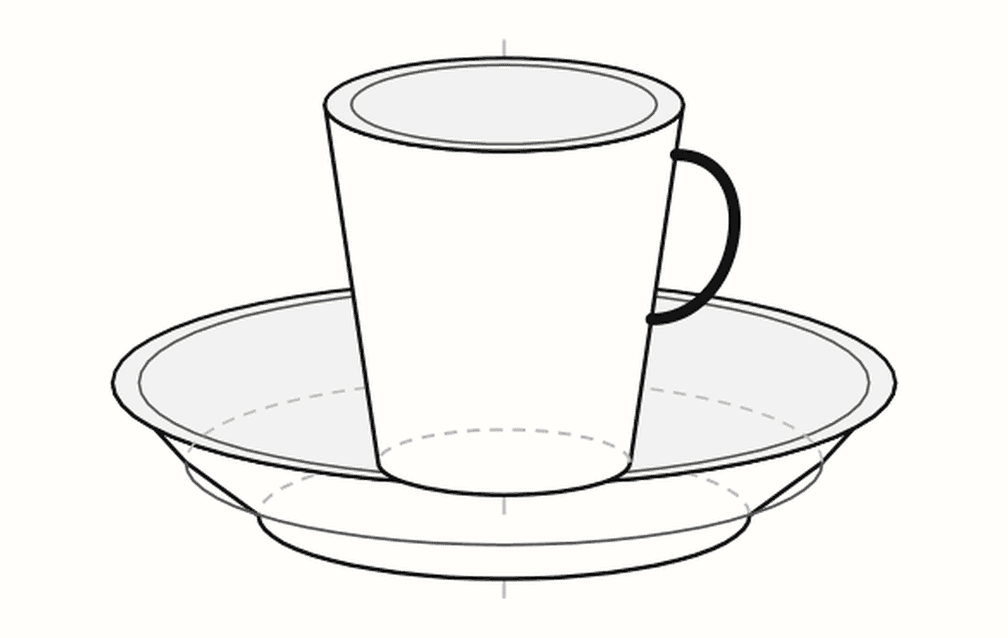
Espresso cup & saucer, on the house
A template to print, then news only when it's worth your time.
No kiln? Air-dry clay hardens simply by drying in the air. It’s an easy way to start making things at home, and pottery templates work with it too: cut your pieces from a slab, assemble them, and let them dry.
What air-dry clay can (and can’t) do
Air-dry clay is great for decorative and storage pieces: trinket dishes, boxes, jewellery dishes, small vases for dried flowers. Once dry, it can be sanded, painted and varnished.
It has three limits worth knowing before you start:
It isn’t watertight. Water softens it, even when varnished. No vases for fresh flowers, no pots for watered plants.
It isn’t food safe. No mugs, plates or bowls for eating or drinking.
It stays fragile. It doesn’t handle knocks well and can’t go in the dishwasher.
For a candle holder, use an LED candle or slip a glass inside.
5 ideas, each with its template
1. A trinket dish
A slab with raised edges: the ideal first project, with no tricky assembly. Painted or left raw, it’s at home on a hallway shelf.

2. A box
Four walls, a base and a lid: a small box for jewellery or paper clips. The template accounts for slab thickness so the corners meet.

3. A candle holder
A cylinder pierced with small patterns, with an LED candle inside. Quick to make and lovely once lit.

4. A small decorative vase
Facets assembled into a geometric vase, for dried flowers or branches. Keep it away from water.
Open the faceted vase template

5. A ring dish
A small round dish with a low rim for rings and earrings. A small size dries faster and warps less.

Setting shrinkage in the tool
Air-dry clay also shrinks as it dries, and the rate varies from brand to brand. To get a piece the right size, measure it once with a test tile: score 100 mm on a fresh slab, let it dry completely, and measure again. The calculation is explained in our guide how much does clay shrink?
Then enter that percentage in the tool’s shrinkage field, instead of the presets designed for kiln-fired clays.
Thickness and joining
Roll an even slab between two guide sticks (see how thick a clay slab should be). To join two pieces, score both edges, dampen them, press them together, then smooth the seam.
Dry slowly, away from draughts and direct heat, under loose plastic for the first few days. Drying too fast is the main cause of cracks.
FAQ
Can you make a mug with air-dry clay?
Not one to drink from: it is neither watertight nor food safe. A decorative mug or a pencil pot works fine.
Do you need a kiln?
No. Air-dry clay hardens in the air, with no firing. That’s what sets it apart from regular pottery clay.
Do pottery templates work with air-dry clay?
Yes. They are for cutting slabs to the right size, whatever the clay. Just measure your clay’s shrinkage and enter it in the tool.
Read also: 8 pottery ideas without a wheel
To remember
Measure your clay once, then let the tool apply shrinkage to all your dimensions.
LC
Louis Coffin
Designer and amateur ceramist. Creator of the Gabarits tool.
To read next
Ready to start your first template ?
Free, in your browser. Choose a shape and print to actual size.